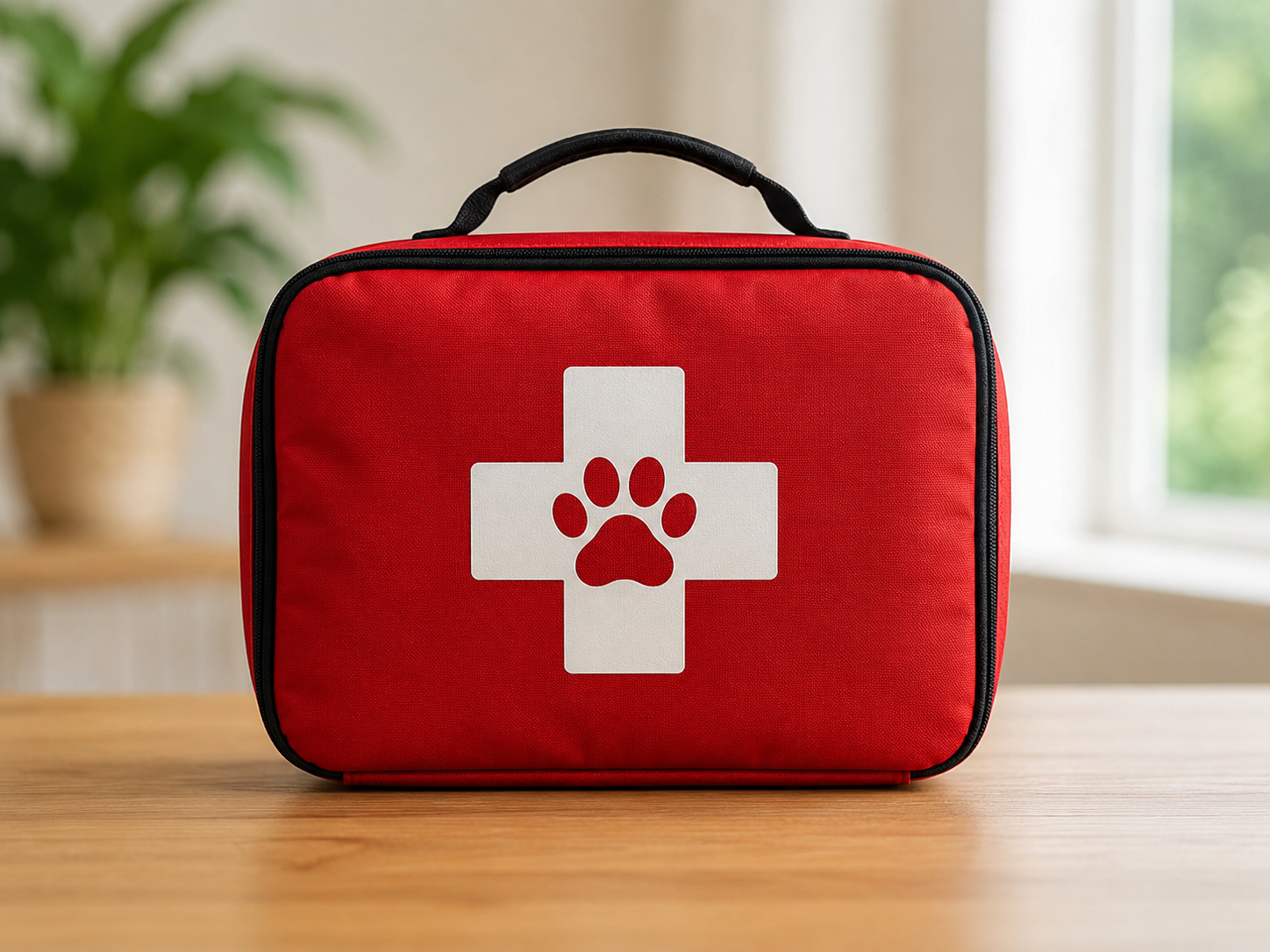
Whether you’re embarking on a weekend getaway, planning a cross-country road trip, or want to be prepared for emergencies at home, a well-stocked pet first-aid kit for travel ensures you can provide immediate care to your pet before reaching professional veterinary help. A pet first-aid kit cannot replace a veterinarian, but it can help you respond faster during minor injuries, travel stress, wounds, insect bites, or emergencies where your pet needs basic care before professional help is available.
This comprehensive guide walks you through everything required to assemble both a home-based and portable pet first-aid kit for travel, complete with detailed checklists, safety notes, and storage tips.
DIY Pet First-Aid Kit vs. Readymade Kits: Which Should You Choose?
DIY Kits: Advantages and Disadvantages
Creating your own pet emergency first aid kit allows complete customization based on your specific pet’s needs and avoid paying for pre-selected items you’ll never use. DIY kits typically cost less than pre-assembled options since you purchase only what you need and can source supplies from multiple retailers.
However, DIY kit assembly requires research and knowledge because mistakes in assembly could mean missing crucial supplies during emergencies.
DIY kits also demand organizational discipline. Without built-in compartments, you must create your own organization system and maintain inventory to ensure supplies aren’t depleted or expired.
Readymade Kits: Advantages and Disadvantages
Pre-assembled pet first-aid kits offer convenience and the peace of mind. Everything comes in one organized package with instructions included, eliminating the need for extensive research.
Readymade kits are particularly valuable for travel since they’re designed to be portable and include items specifically selected for travel situations. The built-in organization system makes items easy to locate during emergencies.
Readymade kits force you to accept pre-selected items that might not perfectly match your pet’s needs. You also pay for convenience and professional curation, resulting in higher costs.
Additionally, readymade kits vary in quality. Some reputable options include high-quality supplies, while others contain substandard items.
Best Approach: Hybrid Method
Many experienced pet owners employ a hybrid approach purchasing a quality readymade kit as the foundation and then adding customized items specific to their pet’s needs and anticipated situations. This combines convenience with customization, offering practical advantages of both approaches.
Home-Based Pet First-Aid Kit
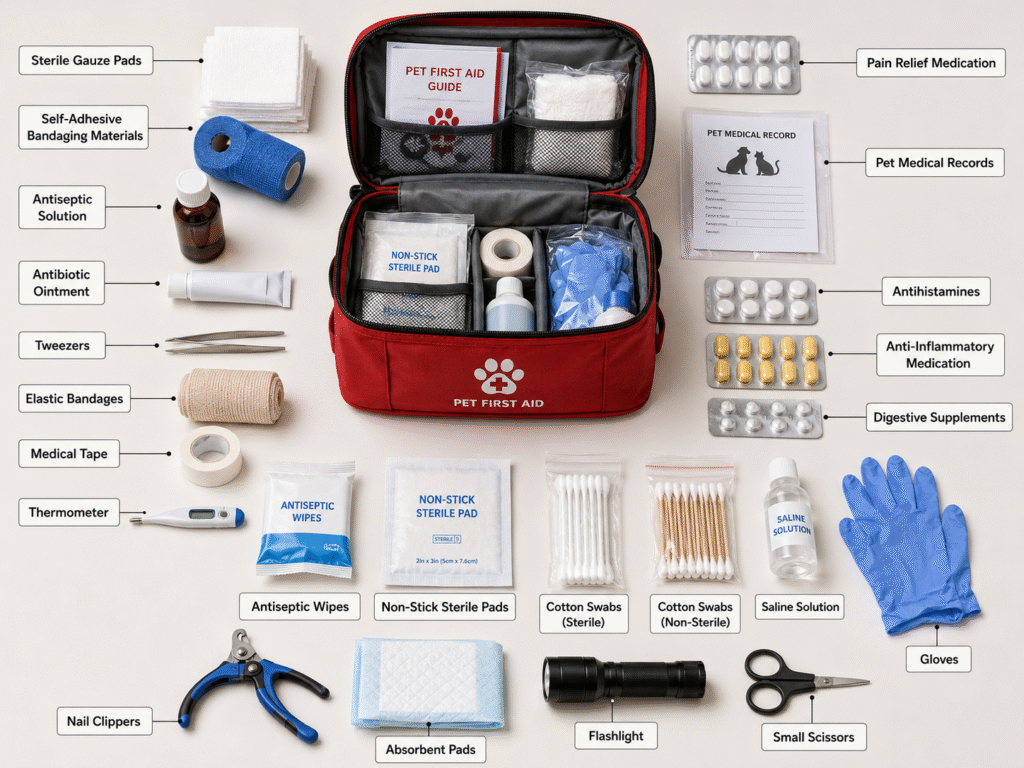
Your home-based pet first-aid kit can be more extensive than travel versions since portability isn’t a concern.
Wound Care and Cleaning Supplies
- Sterile gauze pads: Your home kit should include multiple sizes of sterile gauze pads for cleaning and covering wounds. Sterile gauze prevents infection introduction while allowing wounds to breathe.
- Sterile saline solution: It serves multiple purposes, cleaning wounds, flushing foreign objects, and rinsing eyes or ears. Unlike tap water, sterile saline won’t introduce harmful bacteria or chemicals.
- Antiseptic solutions and wipes: Include solutions specifically formulated for animal use. Human-grade antiseptics can be toxic to pets if ingested or absorbed through skin. Veterinary-approved antiseptic wipes provide convenient pre-moistened cleaning without requiring separate water sources.
- Self-adhesive bandaging: Easy to wrap around wounds or injuries without requiring tape that can be difficult to apply on struggling pets.
- Elastic bandages: To provide compression for sprains and strains while maintaining some movement.
- Medical tape: secures dressings and bandages, though pet-specific options are preferable to human medical tape.
Medications and Treatments
- Antibiotic ointment: Your home kit should include antibiotic ointment for minor cuts and abrasions to prevent infections. Always use veterinary-formulated products, as some human products contain ingredients toxic to pets.
- Anti-inflammatory medications: These are particularly valuable for sprains and minor injuries as they reduce swelling and pain. It require veterinarian approval for your specific pet before inclusion in your kit.
- Antihistamines: To address allergic reactions and insect sting responses. Dosing varies considerably by pet weight and species, so veterinary consultation is essential before including these medications.
- Activated charcoal: It can help if your pet ingests certain toxins. It’s only effective within a specific timeframe. Your veterinarian can advise whether to include this and how to administer it properly.
- Digestive supplements and probiotics: These help to manage upset stomachs and diarrhea. These are often valuable inclusions since digestive upset is among the most common home emergencies.
- Pain management medications: It helps pet experiencing discomfort before professional evaluation. These must be veterinarian-approved and appropriate for your pet’s species, age, and health status.
Important safety note: Do not add medicines to your pet first-aid kit casually. Pain relief medicines, anti-inflammatory drugs, antihistamines, activated charcoal, hydrogen peroxide, digestive medicines, and calming products should be included only after your veterinarian confirms the exact product, dose, and situation in which it can be used. Many human medicines are unsafe for pets, and toxin-related treatment should never be started without veterinary guidance.
Diagnostic and Monitoring Tools
- Digital thermometer: These are designed for rapid animal temperature readings allows you to assess fever or hypothermia.
- Tweezers: It help remove splinters, ticks, or other foreign objects. Proper tick removal requires specific techniques, always pull parallel to skin rather than twisting, and ensure the entire head is removed.
Bandaging and Support Materials
- Elastic wraps: Secure bandages or provide compression for sprains. Different widths accommodate various injury locations and sizes.
- Cotton swabs: Aid in cleaning ears, eyes, or small wounds. Keep regular swabs for general cleaning, sterile swabs for wound care.
- Non-stick sterile pads: Prevent bandages from sticking to wounds, which is painful and damaging when removed.
- Tensor bandages: Provide support for limbs during sprains and strains, stabilizing joints during healing.
Documentation and Reference Materials
Documents: Keep detailed records of your pet’s medical history, current medications, vaccination status, and microchip number. This information is invaluable if you need to describe your pet’s health to emergency veterinarians.
Reference card: Create a reference card listing emergency veterinary clinic addresses and phone numbers, your regular veterinarian’s information, an after-hours emergency clinic, and an animal poison control number.
How to Store a Pet First-Aid Kit
Store In a cool dry space: Store your home pet first-aid kit in a cool, dry location away from direct sunlight. Bathrooms, despite convenience, actually create too much moisture from showers and humidity.
Label everything: Clearly labelled and organized supplies by category is crucial during emergencies when you need to locate specific items immediately.
Use Box with compartments: Use a tackle box, toolbox, or dedicated container with compartments. The structure keeps supplies organized and makes inventory checks easier.
Check expiration: It is useful to check expiration dates quarterly and replace any expired items immediately. Many first-aid supplies have limited shelf lives, and expired medications may be ineffective.
Pet First-Aid Kit for Travel
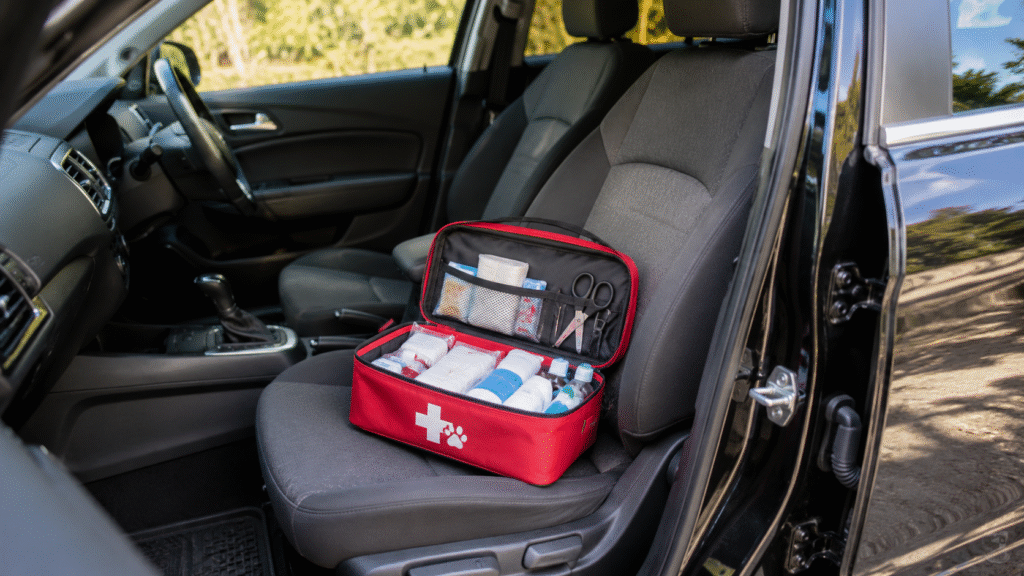
Travel kits including high-frequency-need supplies while excluding bulk items that might not fit in travel luggage.
Core Travel Kit Supplies
- Gauze Pads: Include multiple sizes of sterile gauze pads, though fewer than in your home kit. Focus on smaller, individual packages that save space.
- Saline Solution: Pack sterile saline solution in small, squeezable bottles designed for travel. These dispense precise amounts without carrying large containers.
- Antibiotic Ointment: Include antibiotic ointment in small tubes rather than large jars. Many brands offer travel-sized options perfectly suited for pet first-aid kits.
- Self Adhesive Bandage: Pack self-adhesive bandaging materials in various widths. These wrap around wounds without requiring tape and are ideal for travel since they stay in place despite activity.
- Elastic Bandages: Include elastic bandages for sprains and strains. Limit quantity compared to home kits but ensure adequate coverage for minor injuries.
- Medical tape: keep in smaller quantities addresses bandage securing needs without excess bulk.
- Tweezers: To remove splinters or ticks—crucial during outdoor travel where these injuries are common.
Medications for Travel
Include medications your veterinarian recommends specifically for travel situations. Ask your vet which medications are safe to give during travel and appropriate dosing.
- Pain Relief: Pack pain relief medications approved for your pet and appropriate for anticipated situations. Travel-related stress, injury, or illness might require pain management.
- Antihistamines: Include antihistamines if your pet has known allergies. Travel exposes pets to new environments and potential allergens, making these particularly valuable.
- Digestive medications: For motion sickness and stress-related stomach issues common during travel.
Travel-Specific Inclusions
- Thermometer: Pack a small thermometer. Digital thermometers designed for quick readings take up minimal space.
- Identification documentation: Include your pet’s identification documentation, microchip number, vaccination records, photos showing your pet’s distinctive markings.
- Local Veterinary Clinic Information: Store contact information for emergency veterinary clinics at your destination. Research this before travel rather than scrambling during emergencies.
- Regular medications: Pack any regular medications your pet takes. Never rely on purchasing medications at your destination; shortages or unavailability create dangerous situations.
- Medical Documents: Include a copy of your pet’s medical history highlighting relevant conditions, allergies, or previous reactions to medications.
Packaging for Travel
- Use a small, durable container with compartments, soft-sided bags for air travel where rigid carriers might be restricted.
- Keep your kit in carry-on luggage during flights rather than checked baggage. If luggage is lost, you lose your first-aid supplies when you need them most.
- Pack your pet first-aid kit for travel where you can access it quickly. During road trips, keep it on the front seat or easily accessible from the backseat rather than buried in the trunk.
- Label everything clearly, for quick access during emergencies.
How to Choose a Pet First-Aid Kit Container
When choosing a container for your pet first-aid kit, focus on durability, visibility, and quick access.
- A waterproof or water-resistant container is useful for road trips, outdoor stays, and monsoon travel because it protects medicines, bandages, and documents from moisture.
- Transparent compartments make it easier to find supplies during an emergency, while an easy-open zip or latch helps you access the kit quickly without struggling.
- A separate medicine pouch is also helpful, especially if your pet takes regular medication or has vet-approved emergency medicines.
- Choose a size that fits comfortably in your car, travel bag, or luggage without becoming bulky.
- A bright colour or a clearly labelled box makes the kit easy to spot when you are stressed or in a hurry.
- For flights, a soft-sided pouch is usually more convenient, while a hard box works better for home storage or car travel.
What to Include in Pet First Aid Kit: Complete Checklist
Review the kit every few months, replace expired items, and update your pet’s medical records before every major trip. Most importantly, keep medicines and toxin-related products in the kit only after your veterinarian confirms what is safe for your pet.
Important Items (Must-Have)
- Sterile gauze pads (multiple sizes)
- Self-adhesive bandaging materials
- Elastic bandages
- Medical tape
- Antiseptic solution (veterinary-approved)
- Antibiotic ointment (veterinary-approved)
- Antiseptic wipes
- Non-stick sterile pads
- Cotton swabs (sterile and non-sterile)
- Absorbent pads (for incontinence or travel)
- Saline solution
- Eye wash solution
- Thermometer (rapid-read)
- Tweezers (for splinter/tick removal)
- Nail clippers (for overgrown nails causing pain)
- Small scissors (for cutting tape or gauze)
- Collar and leash (for restraint during treatment)
- Muzzle (even gentle pets might bite when injured/scared)
- Gloves (to prevent contamination and protect yourself)
- Flashlight (for examining injuries in poor lighting)
- Pet vaccination records copies
- Pet photos and identification
- Insurance documentation
- Your pet’s medical records and microchip information
- Emergency veterinary contact information
Vet-approved only
- Antihistamines (veterinarian-approved)
- Anti-inflammatory medication
- Pain relief medication (veterinarian-approved)
- Digestive supplements/probiotics
- Calming supplements or medications
- Activated charcoal (for certain poisonings)
- Hydrocortisone cream (for itching/hot spots)
- Hydrogen peroxide (in specific concentrations for vomiting induction, if approved by vet)
- Travel-sized medications
Hydrogen peroxide should not be used to induce vomiting unless a veterinarian or poison-control professional specifically instructs you to do so.
What Not to Put in a Pet First-Aid Kit
- Human painkillers
- Human antiseptic creams
- Essential oils
- Dettol/Savlon-style household antiseptics unless vet-approved
- Random antibiotics
- Expired medicines
- Hydrogen peroxide for routine wound cleaning
- Herbal calming drops without ingredient review
Common Mistakes When Assembling Pet First-Aid Kits
Including Human Medications: Using human-grade medications on pets can be dangerous. Many substances safe for humans are toxic to animals. Always use veterinary-approved medications specifically formulated for your pet’s species.
Neglecting to Update Records: As your pet ages, medications change, health status evolves, and new information emerges. Failing to update your emergency information means veterinarians lack current knowledge about your pet’s conditions.
Overstocking Perishable Items: Medications, ointments, and solutions expire. Stocking excessive quantities means items might expire before use. Better to maintain reasonable quantities and replace them before expiration.
Ignoring Temperature Sensitivity: Certain medications and supplies require specific storage temperatures. Exposing them to heat or freezing damages their effectiveness. Store your kit appropriately for your climate.
Forgetting Customization: A generic pet first-aid kit doesn’t account for your specific pet’s health issues, allergies, or vulnerabilities. Customize your kit based on your pet’s individual needs.
Overlooking Organization: Even perfectly stocked kits are useless if you can’t locate items during emergencies. Invest time in organizing supplies logically and labeling everything clearly.
Frequently Asked Questions
Q: How often should I replace items in my pet first-aid kit?
A: Check quarterly for expired items and replace them immediately. Supplies used for minor injuries need replenishment. Medications have specific expiration dates and must be replaced when they expire. Even unopened supplies degrade over time, so annual complete replacement is wise for older items.
Q: Can I use human bandages and medications on my pet?
A: Some human supplies are safe for pets, but many are not. Never assume human medical supplies work for animals. Always consult your veterinarian before using any human product on your pet. Many human medications are toxic to animals even in small quantities.
Q: What’s the ideal size for a portable pet first-aid kit for travel?
A: Your pet first-aid kit for travel should fit in carry-on luggage or a small travel bag that fits under vehicle seats. It should be large enough to contain essential supplies but compact enough to carry without burden. A container roughly 12″x8″x6″ accommodates essential travel supplies.
Q: Should I include my pet’s regular medications in the first-aid kit?
A: Keep regular medications separate from the first-aid kit but store them nearby. Your pet’s ongoing medications are accessed regularly, so keeping them separate prevents kit disorganization. However, always have backup quantities of regular medications in your travel kit in case your primary supply is lost or damaged.
Q: How much should I expect to spend on a pet emergency first aid kit?
A: A basic home kit costs ₹2,000-₹5,000 to assemble from individual supplies. Travel kits cost ₹1,500-₹3,500. Pre-assembled kits range from ₹2,500-₹8,000 depending on quality and comprehensiveness. Budget reflects quality—cheaper options often contain lower-quality supplies.
Q: What should I do if my pet ingests something toxic?
A: Contact your veterinarian or animal poison control immediately. Don’t wait for symptoms to develop. Have your pet’s weight and information about the ingested substance ready. Your veterinarian might recommend inducing vomiting or administering activated charcoal, or they might advise monitoring. Never induce vomiting without professional guidance, as some toxins cause more harm coming up than going down.
Q: Can I assemble one kit for multiple pets?
A: While possible, it’s better to maintain separate kits for each pet if they’re different species or significantly different sizes. Medication dosing differs greatly between species and by weight. Separate kits reduce risk of administering inappropriate medications. However, shared supplies like gauze, bandages, and tools work fine in a combined kit.
Q: How do I know if my pet needs emergency veterinary care or home care?
A: Seek immediate emergency care for: difficulty breathing, unconsciousness, severe bleeding uncontrollable by pressure, severe pain, suspected poisoning, inability to urinate or defecate, signs of shock, or large trauma. Home care is appropriate for minor cuts, small insect bites, mild digestive upset, or stress-related symptoms. When uncertain, contact your veterinarian for guidance.
Q: Should I keep my pet first-aid kit for travel with my luggage or in a separate bag?
A: Store your pet first-aid kit for travel in a small carry-on bag separate from luggage. During flights, keep it in carry-on luggage where you can access it if your pet becomes stressed or injured. During car travel, keep it on the front seat or in an easily accessible location, not buried in the trunk.
Q: Do I need training to use my pet emergency first aid kit effectively?
A: Ask your veterinarian for brief demonstrations of bandaging, wound cleaning, and other techniques. Watch educational videos from reputable veterinary sources. Practice applying bandages on your pet before emergencies occur.
Q: Is there a pet poison helpline in India?
A: India does not have one widely used national pet poison helpline for dogs and cats. If your pet eats something toxic, call your regular veterinarian or the nearest 24-hour veterinary hospital immediately. Before travelling, save emergency vet numbers at your destination. You may also save international animal poison-control numbers such as Pet Poison Helpline or ASPCA Animal Poison Control, but international calling charges and consultation fees may apply.
Final Recommendations
A comprehensive pet first-aid kit for travel and home represents one of the most practical investments in your pet’s wellbeing.
Your pet first-aid kit for travel provides immediate care capability, reduces stress during crises, and demonstrates responsible pet ownership. Keep your home kit complete and organized, maintain your travel kit in good condition, and update both regularly to reflect your pet’s changing needs.
Remember that a pet emergency first aid kit supplements but doesn’t replace professional veterinary care. Use your supplies to stabilize your pet’s condition, then arrange professional evaluation for anything beyond minor injuries or illnesses.
Your pet’s health and safety are paramount. When in doubt, always consult a licensed veterinarian.
Disclaimer: This article about pet first-aid kits is provided for informational and educational purposes only. It is not intended to replace professional veterinary medical advice, diagnosis, or treatment. The information contained herein is general in nature and should not be considered a substitute for consultation with a licensed veterinarian.
Image note: Images used in this article are for visual reference only. Product appearance, packaging, labels, and quantities may vary. Always follow veterinary advice when choosing or using medicines and first-aid supplies for your pet.