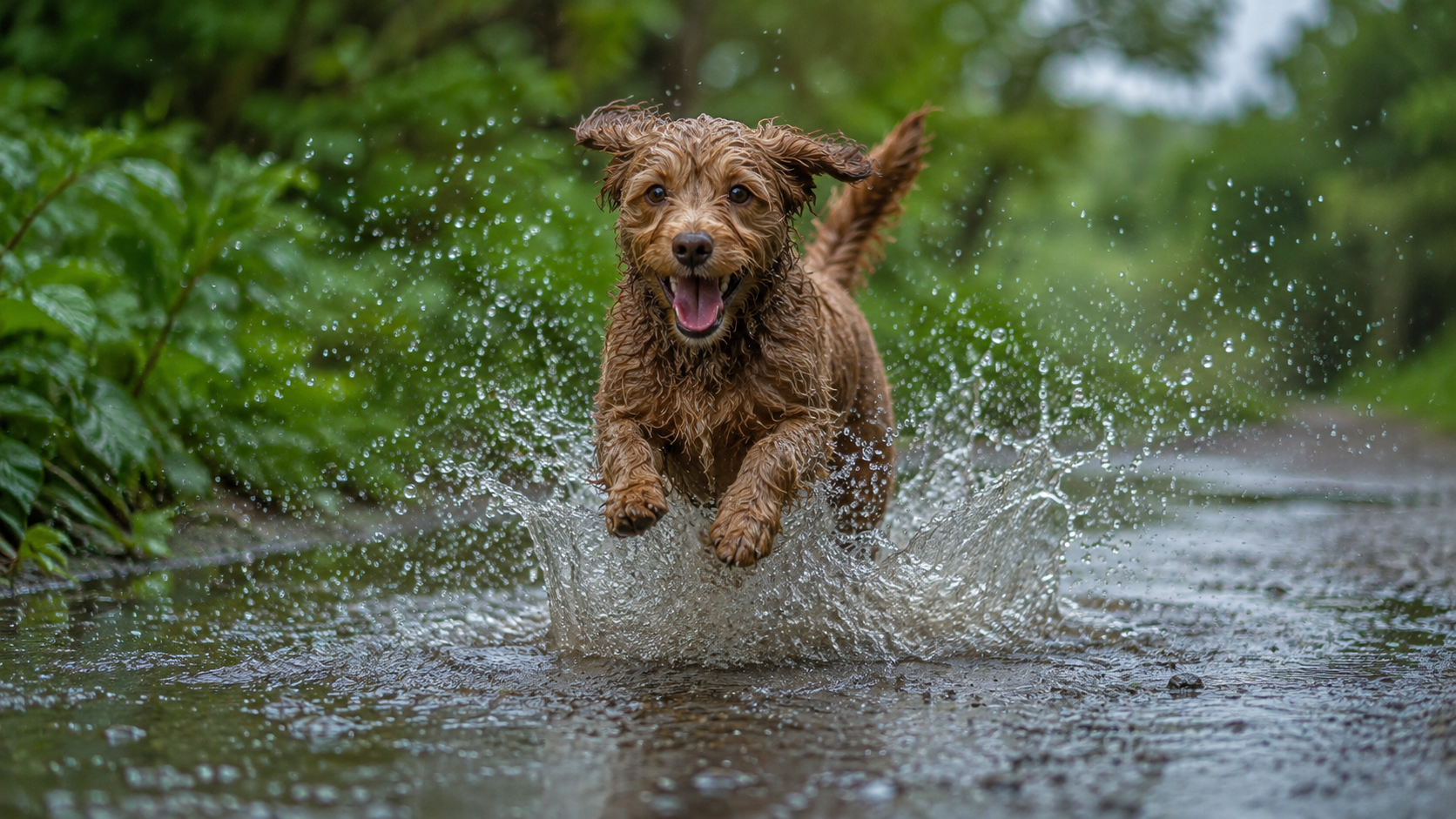
Monsoon walks are unavoidable for most dog owners in India. Your dog still needs exercise and bathroom breaks regardless of the weather. But wet fur combined with a closed car or a shut bedroom door creates that unmistakable damp dog smell that lingers for hours. Learning how to dry your dog after rain is essential not only for odour control but also for your dog’s skin health, especially during India’s long, humid monsoon stretch from June through September.
For longer trips during the rains, it also helps to carry basic monsoon travel gear for dogs so that your dog stays dry, comfortable, and safer outdoors.
This guide explains how to dry your dog properly after a wet walk and how to keep that damp smell out of your car and home.
Why Wet Dogs Smell
Dog skin hosts a different bacterial and yeast population than human skin, and moisture accelerates their activity. When fur stays damp, these microorganisms multiply faster, releasing compounds that create the distinct “wet dog” smell.
The undercoat makes this worse. Breeds with dense double coats such as Labradors, Golden Retrievers, Indian Spitz, and German Shepherds trap moisture close to the skin long after the outer coat looks dry. From the outside, your dog may appear fine. Underneath, the undercoat can stay damp for hours, continuing to feed odour-causing bacteria and yeast.
This is why a quick towel rub often fails. It dries the surface but leaves the real moisture source untouched.
The Right Way to Dry Your Dog After a Walk
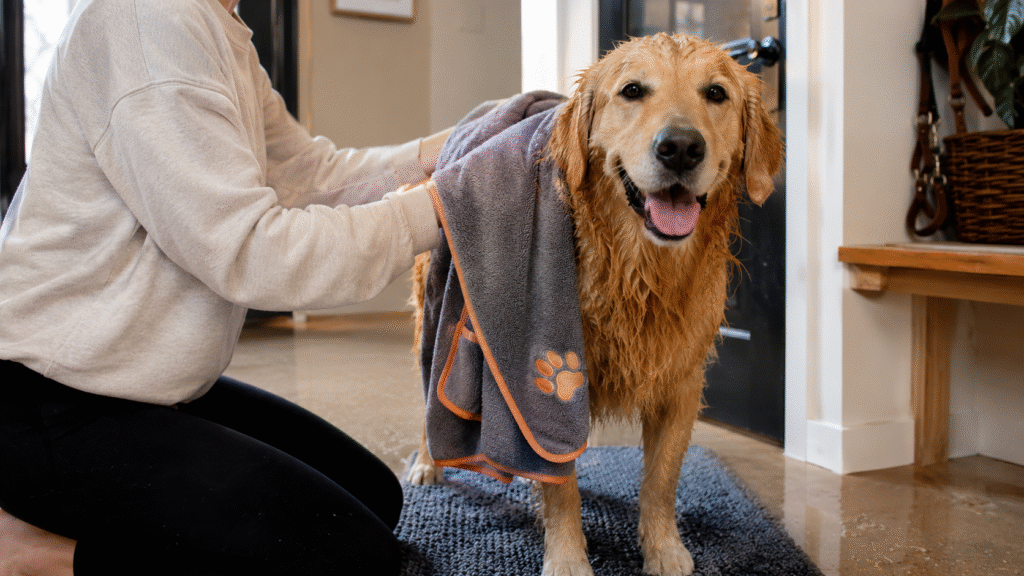
Drying isn’t just toweling in a random direction. A proper sequence gets your dog completely dry rather than just visibly less wet.
Use Quick-Absorbent Microfibre Towels. These towels absorb moisture better than regular towels and dry faster after use, making them especially useful during monsoon travel.
Start with the paws. Paws pick up the most water and mud, and damp paw pads left unattended are the most common source of monsoon-related skin issues. Hold each paw individually and press the towel gently between the pads, not just around the top of the foot.
Move to the belly and legs. These areas splash the most during walks and dry the slowest because they get the least airflow, tucked close to the body.
Then work on the main body. Pat firmly in the direction of hair growth instead of rubbing in circles. Rubbing against the grain roughens the coat, causes tangling in longer-haired breeds, and doesn’t actually remove more water; it just redistributes it.
Finish with the ears. Often skipped entirely, but ears trap moisture in the canal, especially in floppy-eared breeds like Beagles, Cocker Spaniels, and Basset Hounds. Wipe only the outer ear gently. Do not push cotton buds or towels deep into the ear canal.
How do you know when your dog is dry enough? Run your fingers deep into the fur, past the outer layer, and feel the skin. If it feels cool or damp to the touch, your dog isn’t dry, regardless of how the coat looks on the surface.
Use a Battery-Powered Hair Dryer. It is a good option, especially when you need to dry damp fur quickly. Towel-dry your dog first, then use the dryer on a low or cool setting. Keep it moving and avoid holding it too close to the skin.
During humid and rainy weather, packing Dog grooming supplies for travel is useful.
Areas Often Missed
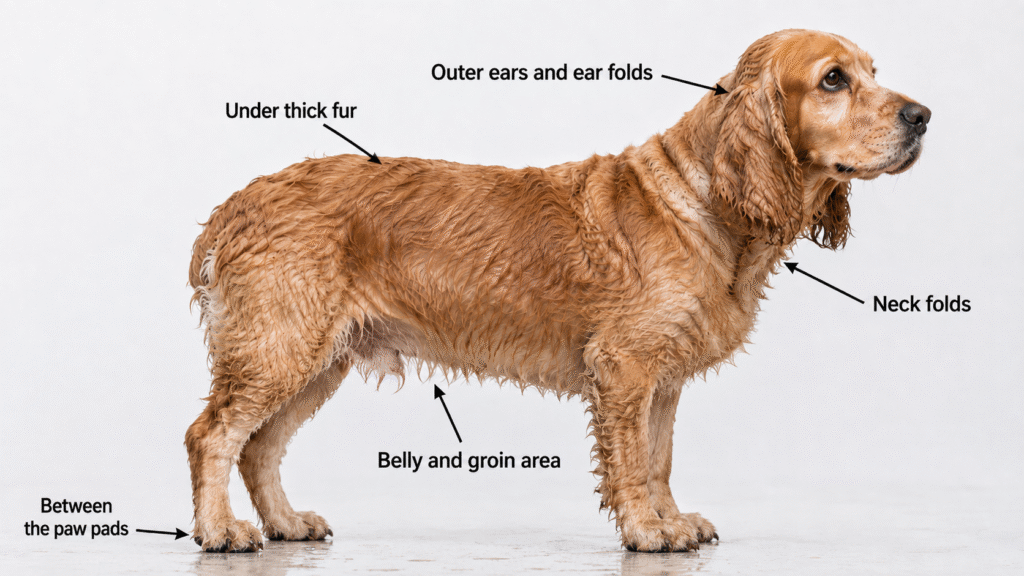
We generally dry the obvious parts: the back, sides, and top of the head, and stop there. The areas that actually cause lingering smell and skin problems are usually skipped.
Between the paw pads. Water and mud collect in the gaps between toes. Left damp, this becomes a breeding ground for yeast infections, recognizable by a sour smell and reddish-brown staining on the fur between toes.
Outer ears and ear folds: Even if you dry the outer ear flap, moisture around the folds can go unnoticed. This is especially important for floppy-eared breeds. Gently wipe only the outer ear and visible folds. Do not push towels, cotton buds, or fingers deep into the ear canal.
Belly and groin area. Low airflow, direct ground contact during walks, and thinner fur in this region mean it often stays wetter for longer than the rest of the body.
Neck folds. Breeds with loose skin around the neck, such as Shar Peis, Bulldogs, and some Mastiff mixes, trap moisture in the folds. This area needs deliberate attention, not a quick towel pass.
How Long Should You Wait Before Travel or Confined Spaces
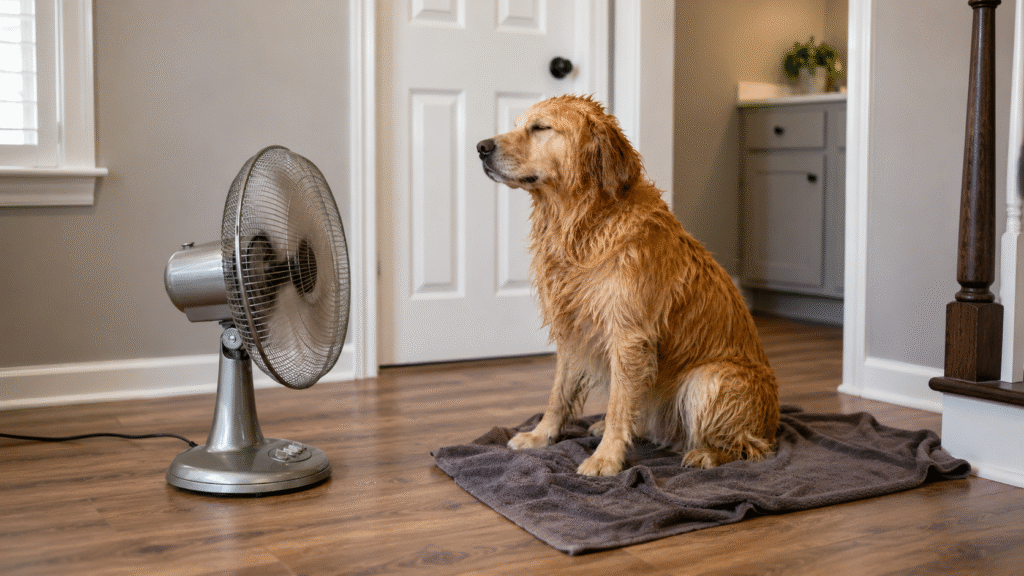
A dog that looks dry after a five-minute towel drying may not be completely dry. Undercoat and skin-level moisture typically take 20 to 30 minutes longer to fully evaporate, even after a thorough towel-dry.
This matters most before car travel. An air-conditioned car is a closed, low-airflow environment, exactly the conditions that trap odor and slow down any remaining drying process. If you towel-dry your dog and immediately put them in a closed car, the smell that develops over the next 20 minutes will linger in your upholstery long after the trip ends.
After towel-drying, give your dog 15 to 20 minutes in an open, well-ventilated space: a balcony, veranda, or room with a fan before placing them in the car. This additional time makes a noticeable difference in both smell and dryness.
How to Prevent Damp Smell During Travel
Even with proper pre-travel drying, some residual dampness is normal during monsoon season. Managing airflow during the drive prevents the dampness from becoming a lingering car odor.
Crack the windows slightly, even with the AC running. A small gap allows moisture-laden air to escape rather than recirculating through the cabin.
Avoid placing a still-damp dog in a closed carrier. Carriers with minimal ventilation trap moisture directly against your dog’s body, intensifying both smell and discomfort. If you must use a carrier for a wet dog, choose one with mesh panels on multiple sides.
On longer journeys, do a mid-trip check. If you’re traveling more than an hour after a wet walk, check your dog’s coat at a rest stop. Thick-coated breeds sometimes need a second short session of drying and airing.
Use a seat cover or absorbent liner rather than letting your dog sit directly on fabric upholstery. Wet fur against car seats transfers moisture into the seat material, which then continues releasing odor long after your dog has dried.
Use Pet-Safe Dog deodorants. A pet-safe dog deodorising spray may help after drying, but it should never be used to cover up damp fur. Use only a vet-approved or pet-safe product, avoid spraying near the face, eyes, ears, or irritated skin, and do not use sprays inside a closed car. Dry first, deodorise only if needed.
Quick Checklist Before Getting in the Car
Before placing your dog in the car after a rainy walk, confirm:
✔ Paws and between-toe areas are dry, not just wiped
✔ Belly and leg fur no longer feels cool or damp to touch
✔ Outer ears and visible ear folds have been gently wiped dry
✔ At least 15–20 minutes have passed since towel-drying, ideally in open air
✔ Car windows are cracked slightly for airflow during the drive
✔ A seat cover or absorbent barrier is in place if any dampness remains
Monsoon-Specific Skin and Coat Care
Prolonged dampness during monsoon months isn’t just an odor issue; it’s a genuine skin health concern. Humidity combined with repeated wet-dry cycles creates ideal conditions for fungal and bacterial skin infections. Watch for these signs:
- Persistent musty or sour smell even after proper drying
- Red, irritated skin, particularly in skin folds or between paw pads
- Excessive scratching or licking at specific areas
- Small bumps, scabs, or hair loss in patches
- Unusual discharge or odor from the ears
How to Avoid Skin Problems During Monsoon
Dry your dog thoroughly after every wet walk, not only when the coat looks visibly soaked. Pay special attention to paws, belly, legs, skin folds, and the base of the tail.
Brush out damp fur gently to improve airflow to the skin, especially in thick-coated and double-coated breeds. Brushing also helps separate clumped fur so the trapped moisture can evaporate faster.
Avoid stagnant puddles during walks whenever possible. Muddy or stagnant water can expose your dog’s paws and coat to bacteria, dirt, and irritants.
If your dog is prone to paw irritation, ear trouble, or skin flare-ups during monsoon, keep a basic pet first-aid kit for travel and home ready before the season begins.
When to see a vet:
If irritation persists beyond a few days despite proper drying, or if you notice discharge, a strong odor that doesn’t improve, or your dog seems uncomfortable or in pain, these are signs of an active infection that needs veterinary treatment rather than home management.
For dogs who get anxious during checkups, prepare in advance with a simple dog vet visit preparation plan.
Frequently Asked Questions
Why does my dog still smell even after I dried them?
Surface drying often misses the undercoat and skin-level moisture, which continues odor-causing bacterial activity even when the outer coat appears dry.
Is it okay to use a hairdryer on dogs?
Yes, on a cool or low-heat setting, kept moving and held at a reasonable distance from the skin. Avoid high heat, which can burn sensitive skin, and never leave a hairdryer static in one spot. Many dogs are initially nervous around the sound, so introduce it gradually rather than using it for the first time when you’re in a hurry.
How often should I bathe my dog during monsoon?
Bathing frequency depends on breed and activity level, but during monsoon, focus more on drying after every wet walk than on increasing bath frequency. Over-bathing can strip natural skin oils, which sometimes worsen skin issues rather than preventing them. A weekly bath combined with thorough post-walk drying is generally sufficient for most dogs.
Can damp fur actually cause skin problems, or is it just about smell?
Yes, prolonged dampness can become a real skin-health issue. Moisture trapped in the coat, between paw pads, inside skin folds, or around the ears can encourage fungal and bacterial overgrowth. This is more common during humid monsoon weather and may require veterinary treatment if irritation, odour, discharge, or discomfort develops.
Conclusion
Drying your dog properly after a rainy walk is more important than relying on any single product. Work through the paws, belly, body, and ears in the right order, and give your dog enough time to air out before car travel or any confined space.
This simple routine helps prevent lingering damp smell and reduces the skin problems that can come with prolonged moisture during India’s monsoon season. After every wet walk, do not stop at a quick surface wipe. Dry the areas that trap moisture, check the coat close to the skin, and let your dog rest in a well-ventilated space before moving indoors or into the car. That is what keeps your dog more comfortable and your home and car fresher through the rains.
How do you manage drying your dog after monsoon walks? Share what’s worked (or hasn’t) for you in the comments below. It helps other pet parents dealing with the same seasonal challenge.