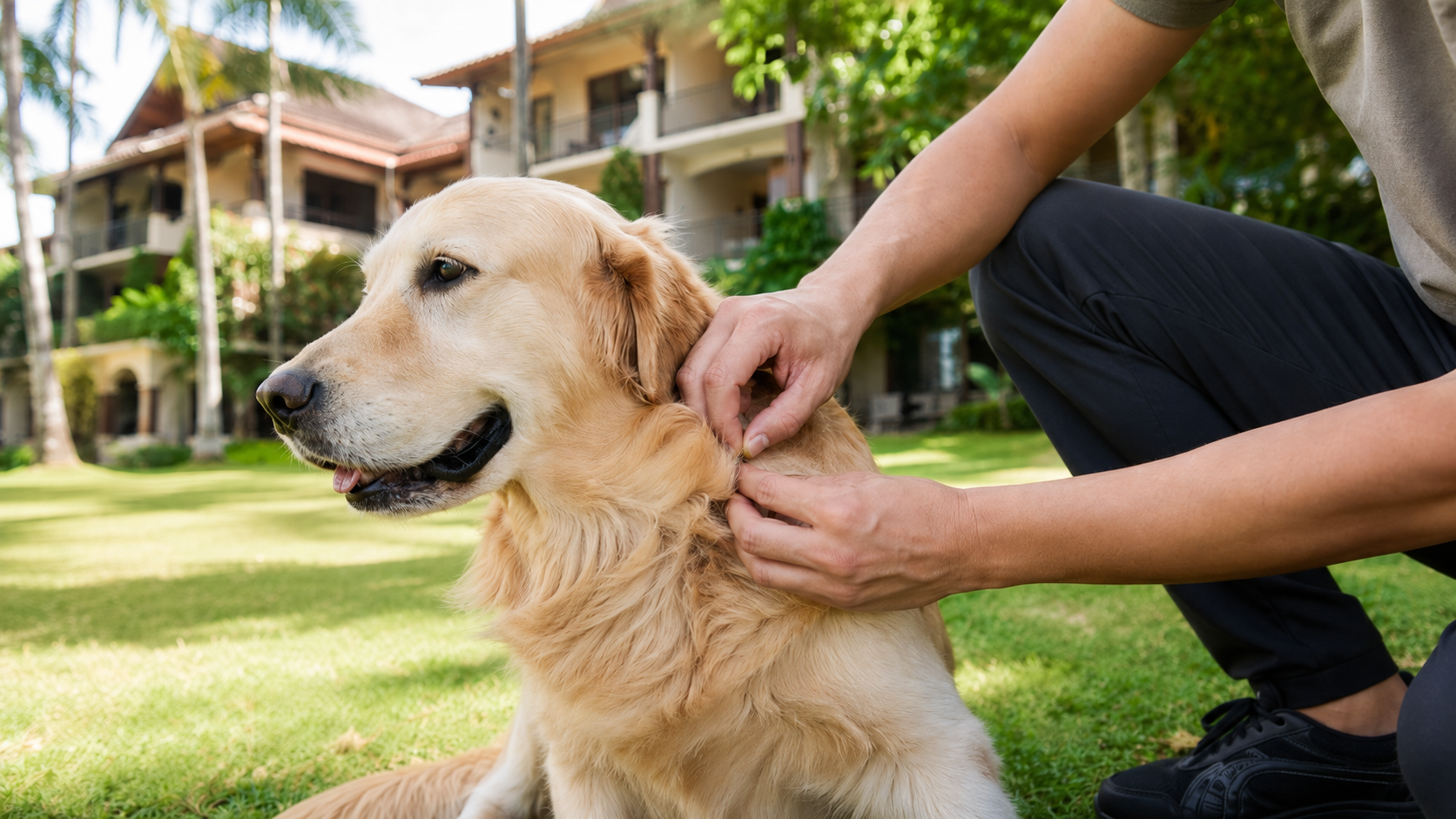
Travelling with dogs to unfamiliar parks, resort lawns, roadside stops, farms, and hill areas can expose them to ticks and fleas. These parasites can cause itching, skin redness, hair loss, wounds from scratching, allergic reactions, and serious discomfort. Ticks can also carry diseases, so prevention and quick removal are important during travel. The best flea and tick protection for dogs while travelling is the one that starts before the trip.
Note: Before choosing any flea or tick product, speak to your veterinarian. Your dog’s age, weight, breed, coat type, skin condition, health history, pregnancy status, and current medicines affect what is safe to use.
Health Effects of Fleas and Ticks During Travel
Fleas and ticks can cause many more problems than itching during travel.
Fleas can irritate the skin, trigger scratching, cause redness, and lead to hair loss or small wounds if the dog keeps biting or licking the area.
Ticks can attach to the skin and cause pain, swelling, weakness, fever, or infection-related symptoms in some dogs.
During travel, these problems become harder to manage because you are away from your regular veterinarian and trusted pet pharmacy.
This is why flea and tick prevention for dogs should be planned before the trip. Good flea and tick prevention for dogs helps reduce scratching, skin irritation, and wounds, as well as the stress of finding parasites during the journey. It also prevents fleas from entering your car, hotel room, bedding, and luggage.
Best Flea and Tick Protection for Dogs While Travelling
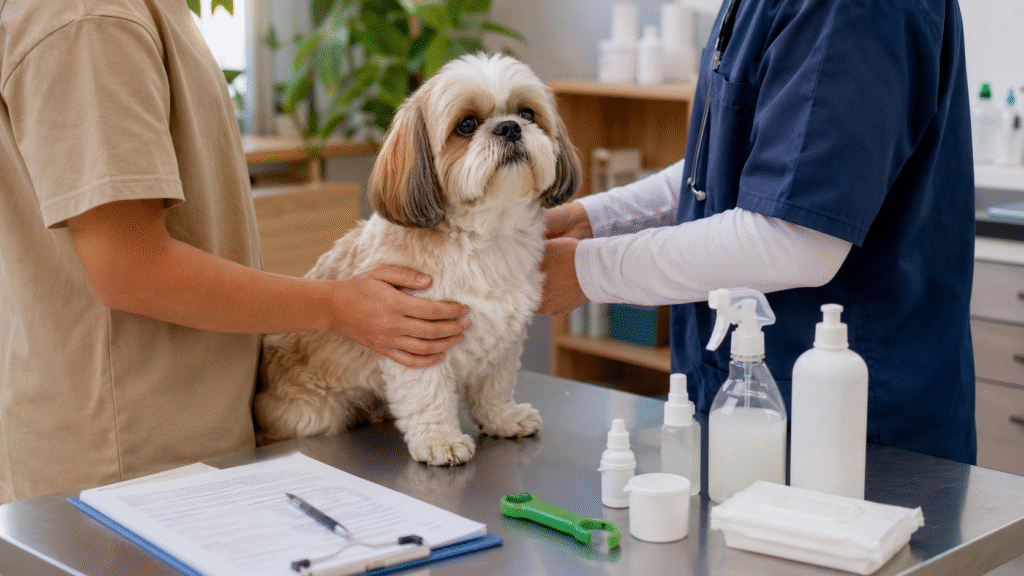
1. Start With Vet-Recommended Prevention Before the Trip
Before travel, ask your veterinarian about products that suit your dog and when to use them. Check the correct dosage, waiting time for treatment to settle, and when and how its effect may wear off.
Do not combine spot-ons, collars, sprays, powders, and oral medicines without veterinary advice. Overuse can irritate the skin or expose your dog to unsafe levels of active ingredients.
2. Spot-On Treatments
Spot-on treatments are applied to the skin, usually at the back of the neck or along the back, depending on the product instructions. They are easy to carry and can be used before travel.
Use the exact product and dose recommended by your veterinarian. Apply it where your dog cannot lick it. Keep children and other pets away until the area is dry, and follow the product instructions about bathing or rain exposure.
3. Tick and Flea Collars
Tick and flea collars can be useful for longer trips because they stay on the dog and provide continuous protection for a set period, depending on the product.
Check the fit carefully. The collar should not be too tight or too loose. It should not irritate the neck or sit under a wet harness for long hours. During travel, check the skin under the collar daily, especially in humid weather, and do not let your dog chew it.
For rainy-season trips, also check our guide on monsoon dog gear for travel to manage wet fur, muddy paws and tick-prone outdoor areas.
4. Oral Flea and Tick Medicines
Oral flea and tick medicines are convenient for travel because they don’t leave an oily patch on the coat and you don’t have to manage a collar also. They are given by mouth and work through the dog’s system.
These medicines should be given only with veterinary approval. Your vet will consider your dog’s weight, age, health, and previous reactions before recommending one. It should never be chosen casually.
5. Tick and Flea Sprays
Tick and flea sprays can be useful in some travel situations, especially when your vet has recommended a pet-safe spray for additional protection. They are often used before walks in tick-prone areas or as part of a broader prevention plan.
Sprays must be used carefully. Avoid the eyes, nose, mouth, genitals, and open wounds. Do not spray heavily on the coat. Let the product dry before your dog licks the area, rolls around, gets on the bed, or enters the car.
6. Tick Remover Tool
A tick remover tool is one of the most useful items in a dog travel kit. If you find a tick attached to your dog, remove it steadily and safely.
Use a tick remover or fine-tipped tweezers near the skin. Pull steadily without squeezing or crushing the tick. Clean the area afterwards with a pet-safe product recommended by your vet.
If your dog develops fever, weakness, loss of appetite, limping, pale gums, or unusual tiredness after a tick bite, contact a veterinarian quickly.
Also read: How to Plan a Vet Visit with Your Dog?
7. Anti-Tick Shampoo
Anti-tick shampoo is useful, especially before or after travel, but it should not be your only method of protection. It does not always provide long-lasting prevention.
Use it only if your vet recommends it for your dog. Avoid frequent medicated baths unless advised, because repeated washing can dry the skin and disturb the coat.
What to Pack for Ticks and Fleas
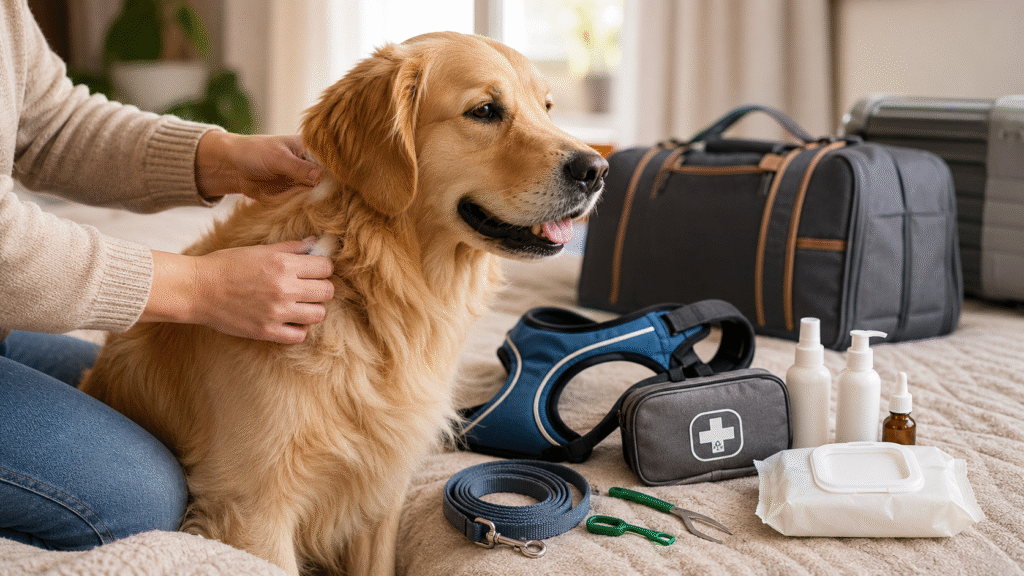
A small parasite-care pouch in your dog’s first-aid kit can save a lot of discomfort during travel. Keep it inside your dog’s travel bag, not buried under luggage. Pack these items:
- Vet-approved flea and tick product
- Tick remover tool or fine-tipped tweezers
- Flea comb or fine-tooth comb
- Pet-safe wipes
- Small torch for checking the coat
- Disposable gloves or tissue
- Pet-safe antiseptic wipe
- Zip pouch for disposal
- Vet contact number
- Product prescription or usage details
This kit supports flea and tick prevention for dogs during trips and helps you act calmly if you find a tick after a walk.
How to Check Your Dog for Ticks After Travel Walks
After outdoor walks, check your dog before entering the car or hotel room. Ticks often hide in warm, less visible areas. Check these spots carefully:
- Inside and around the ears
- Under the collar or harness
- Neck and chest
- Armpits
- Belly
- Groin area
- Between toes
- Around the tail base
- Under thick fur
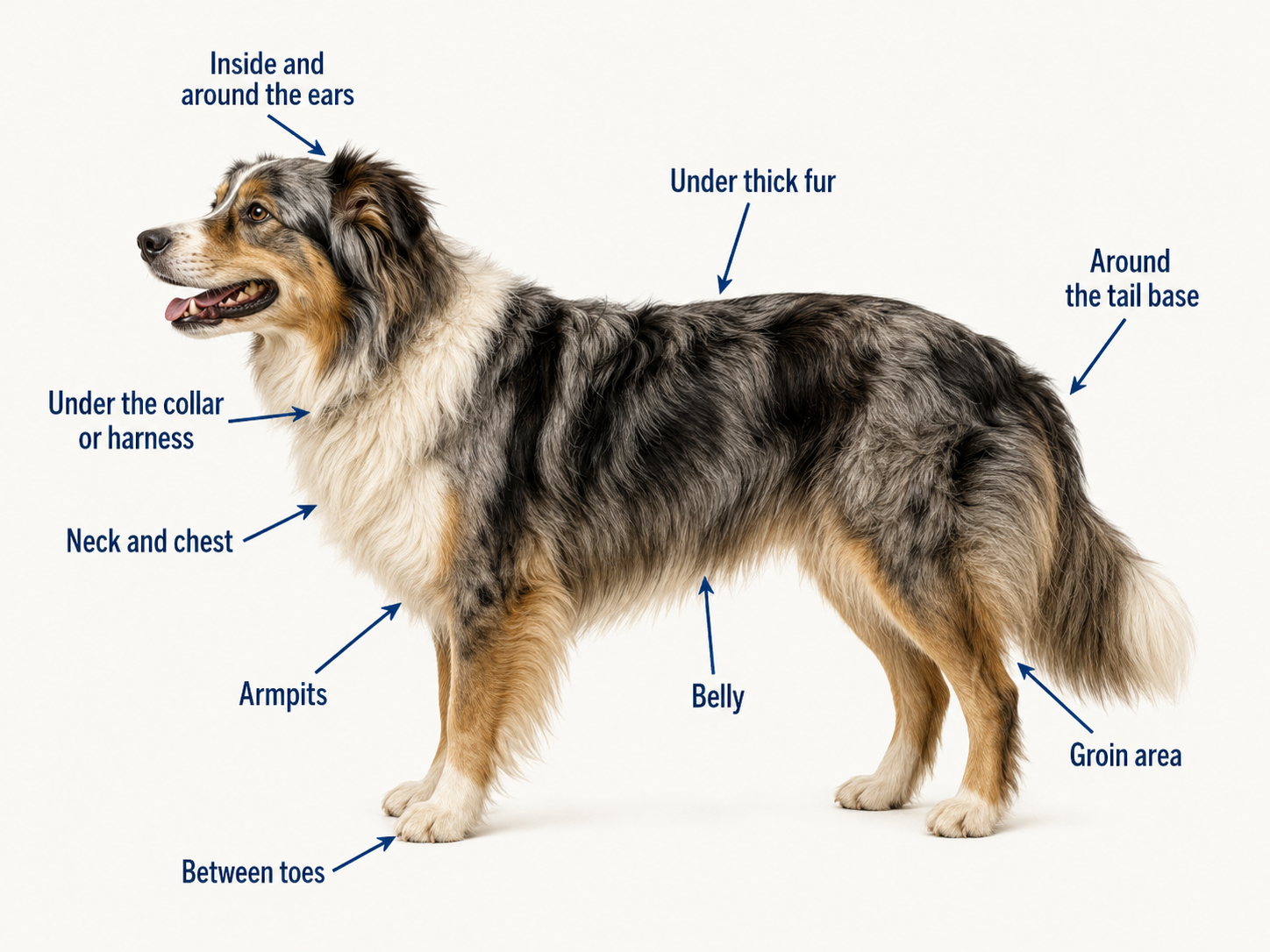
Use your fingers to feel for small bumps. In long-haired dogs, part the coat slowly and check close to the skin. A quick daily check is one of the simplest ways to reduce travel-related tick problems.
Places Where Tick Risk Is Higher
Tick and flea risk increases in places where dogs walk through vegetation, damp ground, or areas visited by other animals. Be more careful around:
- Wet grass
- Resort lawns
- Farms
- Hill stations
- Forest trails
- Monsoon destinations
- Beachside vegetation
- Roadside bushes
- Pet-friendly homestays with open grounds
- Parks used by many dogs
In these places, the best tick prevention for dogs includes vet-approved protection before the trip, shorter controlled walks, and careful checking after every outdoor break.
What Not to Do
Avoid using random products during travel.
- Do not apply human repellents, strong essential oils, unknown powders, household sprays, or products meant for other animals.
- Do not use dog flea and tick products on cats. Some ingredients used for dogs are dangerous for cats. If you travel with both a dog and a cat, keep their products separate and clearly labelled.
- Do not ignore repeated scratching, sudden hair loss, red skin, scabs, fever, weakness, pale gums, limping, or loss of appetite. These signs need veterinary attention.
- Do not wait until you reach a remote destination to think about parasite control. The best tick prevention for dogs starts before the journey.
- Never use human insect repellent on dogs. Products meant for humans can be unsafe for pets.
Flea and Tick Protection Checklist Before Travel
Before leaving, check this list:
- Speak to your vet about flea and tick protection
- Use the correct product for your dog’s weight and health
- Apply or give the product at the right time before travel
- Carry the product details or prescription
- Pack a tick remover tool
- Keep pet-safe wipes and gloves
- Carry a flea comb or fine-tooth comb
- Check your dog after every outdoor walk
- Avoid wet grass, bushes, and unsafe outdoor areas when possible
- Contact a vet if your dog shows unusual symptoms
Frequently Asked Questions
1. What is the best flea and tick protection for dogs while travelling?
The best flea and tick protection for dogs while travelling is the one your veterinarian recommends for your dog’s age, weight, health, coat, and travel conditions. Spot-ons, collars, oral medicines, and sprays can all help when used correctly.
2. Is flea and tick prevention for dogs necessary for short trips?
Yes, short trips can still expose dogs to ticks and fleas, especially in parks, hotel lawns, wet grass, and roadside stops. Even a brief walk can bring parasites into the car or room.
3. Should I use a collar or spot-on treatment?
Both can work, but the choice depends on your dog’s health, coat, skin sensitivity, travel duration, and vet advice. Do not use both together unless your vet says it is safe.
4. Can I use flea spray before every walk?
Use flea or tick spray only according to the product instructions and your veterinarian’s advice. Overuse can irritate the skin or cause discomfort.
5. How do I remove a tick safely?
Use a tick remover tool or fine-tipped tweezers close to the skin. Pull steadily without crushing the tick. Clean the area afterwards and watch your dog for any signs of illness.
6. Are natural flea and tick remedies enough?
Natural remedies are not reliable protection for travel, especially in tick-prone areas. Use vet-approved prevention when travelling with dogs.
7. Can I use dog flea products on cats?
No. Dog flea and tick products should not be used on cats unless a veterinarian specifically approves them for cats. Some dog products are toxic to cats.
Final Note
Fleas and ticks are easier to prevent than manage during a trip. When you are away from home, even a small parasite problem can become stressful because you may not know the nearest vet, pet pharmacy, or safe product option.
Choose flea and tick protection before you travel, pack a small parasite-care kit, check your dog after outdoor walks, and use only vet-approved products. This keeps your dog safer, more comfortable, and better protected during the journey